How to Understand the Amazonian Mushroom Following the Paper Trail Behind the Name
· based on the channel Shroomverse
Key takeaways
- Amazonian mushroom refers to specific psychedelic fungi native to the Amazon basin.
- The name's origin is tied to early scientific papers and specimen collections.
- Taxonomy of these mushrooms has evolved with genetic studies.
- Paper trail reveals misidentifications and synonymies in scientific literature.
- Understanding the name helps clarify the mushroom's cultural and ecological context.
What Is the Amazonian Mushroom and Why Its Name Matters
The Amazonian mushroom generally refers to psychedelic mushrooms collected from the Amazon rainforest, often associated with species like Psilocybe cubensis or related fungi. Its name originates from early mycological descriptions and specimen records linked to the Amazon region, making the paper trail behind this name crucial for proper identification and understanding of its history and taxonomy 02:15.
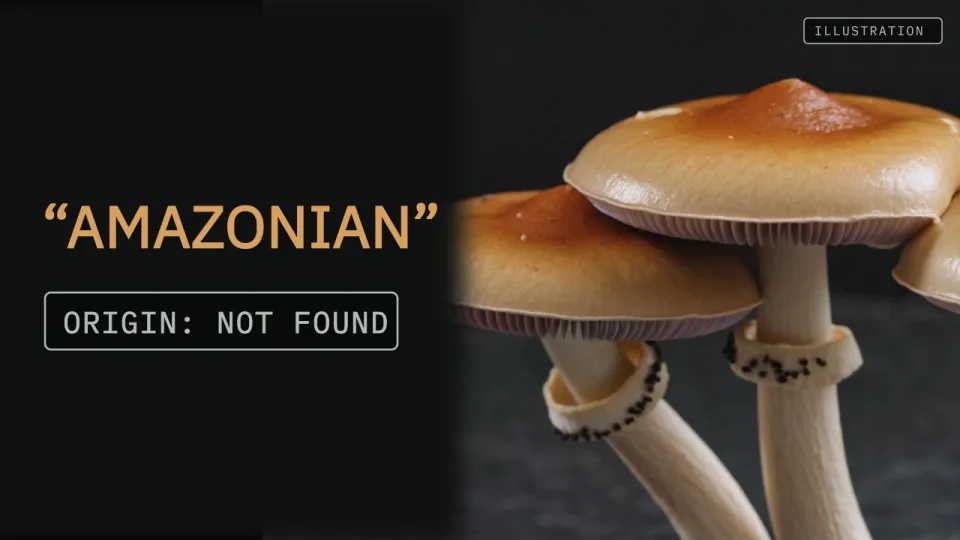
Video: Amazonian Mushroom: Following the Paper Trail Behind the Name
Tracing the Scientific Paper Trail Behind the Name
The term "Amazonian mushroom" isn't just a casual label but stems from formal scientific publications that documented these fungi decades ago. Researchers compiled herbarium specimens and published taxonomic descriptions, which sometimes led to confusion due to overlapping names and reclassifications. Understanding the paper trail involves reviewing original species descriptions, subsequent revisions, and DNA analyses that refined the classification 04:40.
Taxonomy and Classification Challenges
The taxonomy of Amazonian mushrooms has faced challenges because multiple species with similar appearances were initially lumped together. Early 20th-century mycologists often identified specimens broadly, leading to synonymies and name changes. Modern molecular techniques revealed genetic differences among strains, clarifying which species truly belong to the Amazonian group and which do not. This process is key to distinguishing authentic Amazonian mushrooms from look-alikes 07:10.
Ecological and Cultural Significance
Amazonian mushrooms hold significant ecological roles within their rainforest environments, contributing to nutrient cycling and symbiotic relationships. Culturally, indigenous peoples have used these mushrooms for centuries in spiritual and healing rituals. Tracing the scientific name's history also helps link ethnomycological knowledge with modern taxonomy, providing a fuller picture of their importance 10:25.
Common Misconceptions and Clarifications
A frequent misconception is equating the name "Amazonian mushroom" with a single species, while in reality, it refers to a group of related fungi native to the region. The paper trail clarifies that the name has been applied variably in literature, sometimes causing misidentification or overgeneralization. Awareness of this prevents errors in research and cultivation practices 12:50.
How to Use This Knowledge
Researchers, cultivators, and enthusiasts can benefit from understanding the paper trail by:
- Consulting original taxonomic papers and herbarium records.
- Using genetic databases to verify species identity.
- Recognizing the ecological and cultural context of these mushrooms.
- Avoiding mislabeling in trade and scientific work.
This approach ensures accuracy and respects the mushroom’s heritage and biology.
Conclusion
Following the paper trail behind the Amazonian mushroom's name reveals a complex history of taxonomy, cultural significance, and scientific discovery. This trace helps clarify misunderstandings and supports accurate identification and appreciation of these fungi. The detailed analysis by the channel Shroomverse offers valuable insights into this fascinating topic, bridging historical literature and modern science.
Source: Amazonian Mushroom: Following the Paper Trail Behind the Name · Markdown version
Questions & answers
What species does the term Amazonian mushroom usually refer to?
It typically refers to psychedelic mushrooms native to the Amazon region, often linked to species like Psilocybe cubensis and closely related fungi.
Why is tracing the paper trail behind the Amazonian mushroom’s name important?
Because it helps clarify the taxonomy, prevents misidentification, and connects historical scientific descriptions with modern genetic findings.
How have modern techniques changed the classification of Amazonian mushrooms?
Molecular genetics have revealed distinct species differences, correcting earlier broad classifications based solely on morphology.
What cultural significance do Amazonian mushrooms have?
They have been used by indigenous Amazonian peoples for spiritual and healing rituals for centuries, highlighting their ethnomycological importance.